

Acne: Why it Happens & Why it Stays
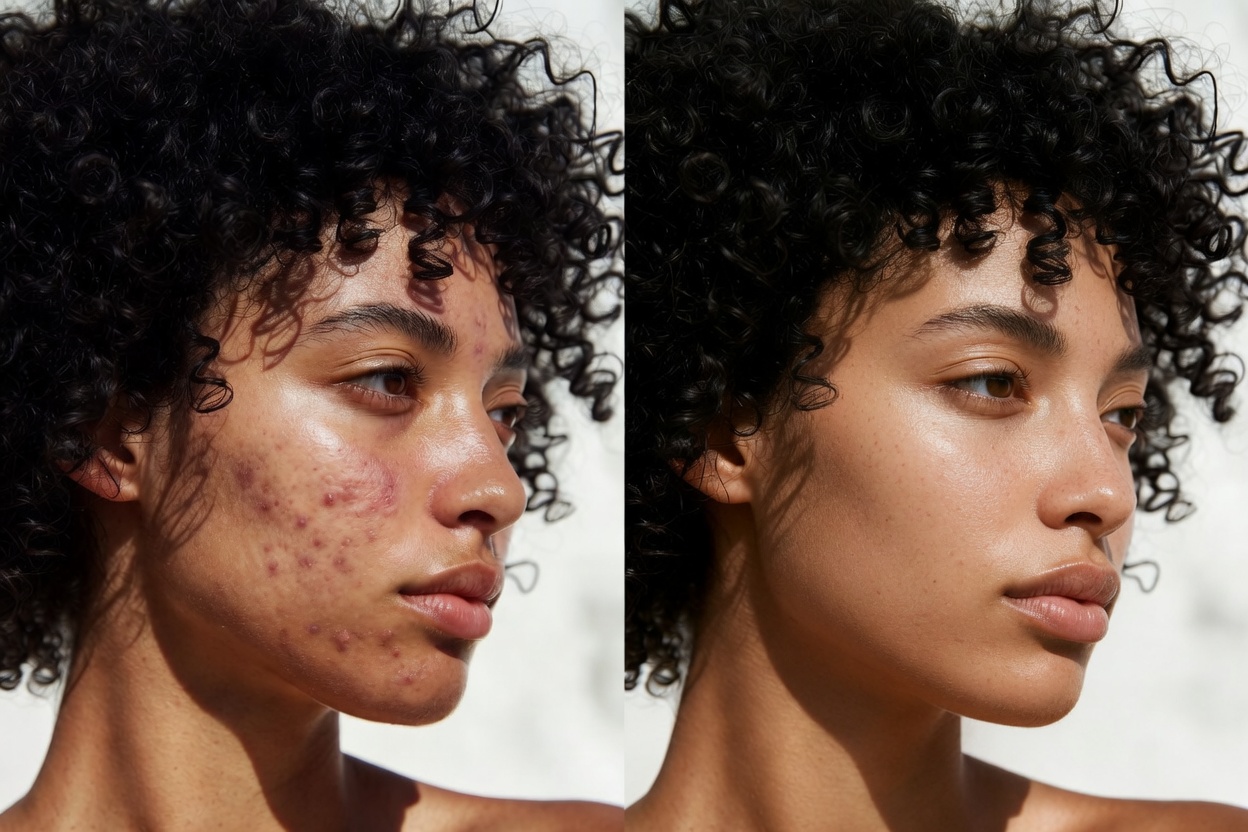
Acne is often dismissed as a simple case of "dirty skin" or a teenage rite of passage, but scientifically, it is a complex, chronic inflammatory disease. To understand why acne appears, lingers, and recurs, we have to look beneath the surface of the skin at the pilosebaceous unit—the microscopic structure consisting of a hair follicle and its attached oil (sebaceous) gland.
Here is the biological breakdown of the acne process.
The "Acne Formula": How a Pimple is Born
Dermatologists generally agree on a four-step pathological process that leads to an acne lesion. It is not just one thing going wrong, but a chain reaction.
1. Excess Sebum Production (The Oil)
The process begins with sebum, an oily substance produced by sebaceous glands to keep skin lubricated and waterproof.
The Trigger: Under normal conditions, sebum is beneficial. However, when stimulated by hormones (specifically androgens like testosterone), these glands go into overdrive.
The Result: The skin becomes excessively oily (seborrhea), creating a rich environment for bacteria.
2. Abnormal Keratinization (The Clog)
Simultaneously, the lining of the hair follicle begins to shed skin cells (keratinocytes).
The Trigger: In acne-prone skin, these cells do not shed smoothly. Instead, they become "sticky" and clump together.
The Result: This mixture of sticky dead skin cells and excess oil forms a plug (micro-comedone) that blocks the pore. This is the precursor to all acne.
3. Bacterial Overgrowth
Your skin is home to a bacterium called Cutibacterium acnes (C. acnes).
The Trigger: C. acnes is anaerobic (it thrives without oxygen). A clogged pore provides the perfect low-oxygen, oil-rich environment for it to multiply rapidly.
The Result: As the bacteria digest the sebum, they break it down into free fatty acids, which are highly irritating to the skin.
4. Inflammation (The Redness)
Finally, your immune system detects the bacterial overgrowth and the irritation.
The Trigger: The body sends white blood cells to the site to fight the bacteria.
The Result: This immune response causes the classic signs of inflammation: redness, swelling, heat, and pain. This is what turns a invisible micro-clog into a visible red bump (papule) or a pus-filled pimple (pustule).
Why It Stays and Keeps Coming Back
Many people wonder why acne is a chronic condition rather than a one-time infection. This is because:
Micro-comedones are Invisible: By the time you see a pimple, the process has actually been going on for weeks. Even when you clear the visible acne, your skin is likely full of microscopic plugs (micro-comedones) that haven't surfaced yet. This is why acne seems to "keep coming back"—the next wave is already forming under the skin.
Genetic Programming: If you have acne-prone skin, your cells are genetically programmed to shed abnormally and your glands are programmed to overproduce oil. Without consistent treatment to correct this cellular behavior, the cycle resets.
Biofilms: C. acnes bacteria can form "biofilms"—a protective shield that acts like a glue, making the bacteria harder to kill and the pore harder to unclog.
️The Contributing Factors
While the mechanism above explains how acne forms, the following factors explain why the mechanism is triggered in the first place.
1. Hormones (The Master Switch)
Hormones are the primary driver of acne at any age.
Androgens: During puberty, menstruation, pregnancy, or conditions like Polycystic Ovary Syndrome (PCOS), androgen levels surge. This directly signals the oil glands to enlarge and produce more sebum.
Cortisol: The stress hormone cortisol can also stimulate oil production, linking your mental state directly to skin health.
2. Genetics (The Blueprint)
Your DNA determines your skin's destiny to a large extent.
Sensitivity: Genetics dictate how sensitive your oil glands are to hormones.
Shedding: Genetics also influence how your skin cells shed. If your parents had severe acne, you are statistically more likely to have sticky skin cells that clog pores easily.
3. Diet (The Fuel)
What you eat can act as an accelerant for the acne process.
High Glycemic Index (GI) Foods: Sugary foods and refined carbs (white bread, soda) cause a spike in blood sugar and insulin. High insulin levels trigger the release of IGF-1 (Insulin-like Growth Factor 1), which tells oil glands to produce even more oil.
Dairy: For some, skim milk specifically has been linked to acne flares, possibly due to hormones present in the milk or its effect on insulin.
4. Dryness vs. Oiliness (The Barrier)
There is a common misconception that dry skin prevents acne.
The Paradox: If you have oily skin but strip it with harsh products, you damage the skin barrier. This causes "reactive seborrhea," where the skin panics and produces more oil to compensate for the dryness.
Dehydration: Acne-prone skin is often dehydrated (lacking water), not just oily (lacking lipid balance). A compromised barrier makes the skin more susceptible to inflammation and bacterial invasion.
5. Stress (The Aggravator)
Stress does not usually cause acne on its own, but it makes it worse.
Inflammation: Stress increases systemic inflammation in the body. This means that when a pimple does form, it is likely to be redder, more painful, and slower to heal because the body's inflammatory response is already heightened.
6. Environmental Factors (The Attack)
Living in urban environments exposes skin to airborne pollutants, including polycyclic aromatic hydrocarbons (PAHs), volatile organic compounds, and particulate matter (PM2.5).
In high humidity conditions, sweat does not evaporate efficiently. This moisture mixes with sebum and dead skin cells, creating a sticky sludge that easily blocks pores. It also creates a tropical climate on your face, encouraging the rapid growth of C. acnes and fungal acne.
Conversely, cold and dry environments (like winter in Beijing) present a different challenge.
Cold air strips moisture from the skin, compromising the stratum corneum (the skin barrier).To protect itself, the skin may panic and overproduce oil (reactive seborrhea) to compensate for the lack of hydration. Meanwhile, the dry, compacted surface skin cells can harden over the pore, trapping oil underneath and causing "winter acne."
Acne is a multifactorial disease involving excess oil, sticky skin cells, bacteria, and inflammation. It is driven internally by hormones, genetics, and diet, and exacerbated externally by pollution, humidity, and barrier damage. It persists because the root causes remain active even after visible pimples are gone. Managing it requires a holistic approach that addresses both the biological mechanism and the environmental context.
At PA BEAUTY, we are dedicated to providing effective, science-backed acne solutions, drawing on over a decade of expertise in treating diverse skin concerns. We understand that acne is more than a surface issue, which is why we focus on identifying and addressing its root causes. To begin your personalized treatment journey, we invite you for a comprehensive VISIA Skin Analysis. This advanced diagnostic tool allows us to delve deep into your skin's unique condition, pinpointing the specific factors contributing to your acne so we can create a targeted and effective plan for you.
Ready to glow?
Book Your Consultation today!
PA BEAUTY Beijing
📍 Shine Hills, Shunyi District (near ISB / Dulwich / Keystone)
📱 WeChat: 64482369 (Fastest)
📞 Phone: +86 138 1124 8726 (WhatsApp)
📧 Email: beijingpaskincareexpert@gmail.com
🌐 Website: www.beijingpabeauty.com
// Popular Feeds
-

-

-

-

Medical Aesthetics in the West vs. East
Mar 18,2026 -

-

 WhatsApp
 Email
Email
 +86 13811248726