

After GLP-1 Weight Loss: What Happens to Facial Volume, Skin Laxity and Body Contour?
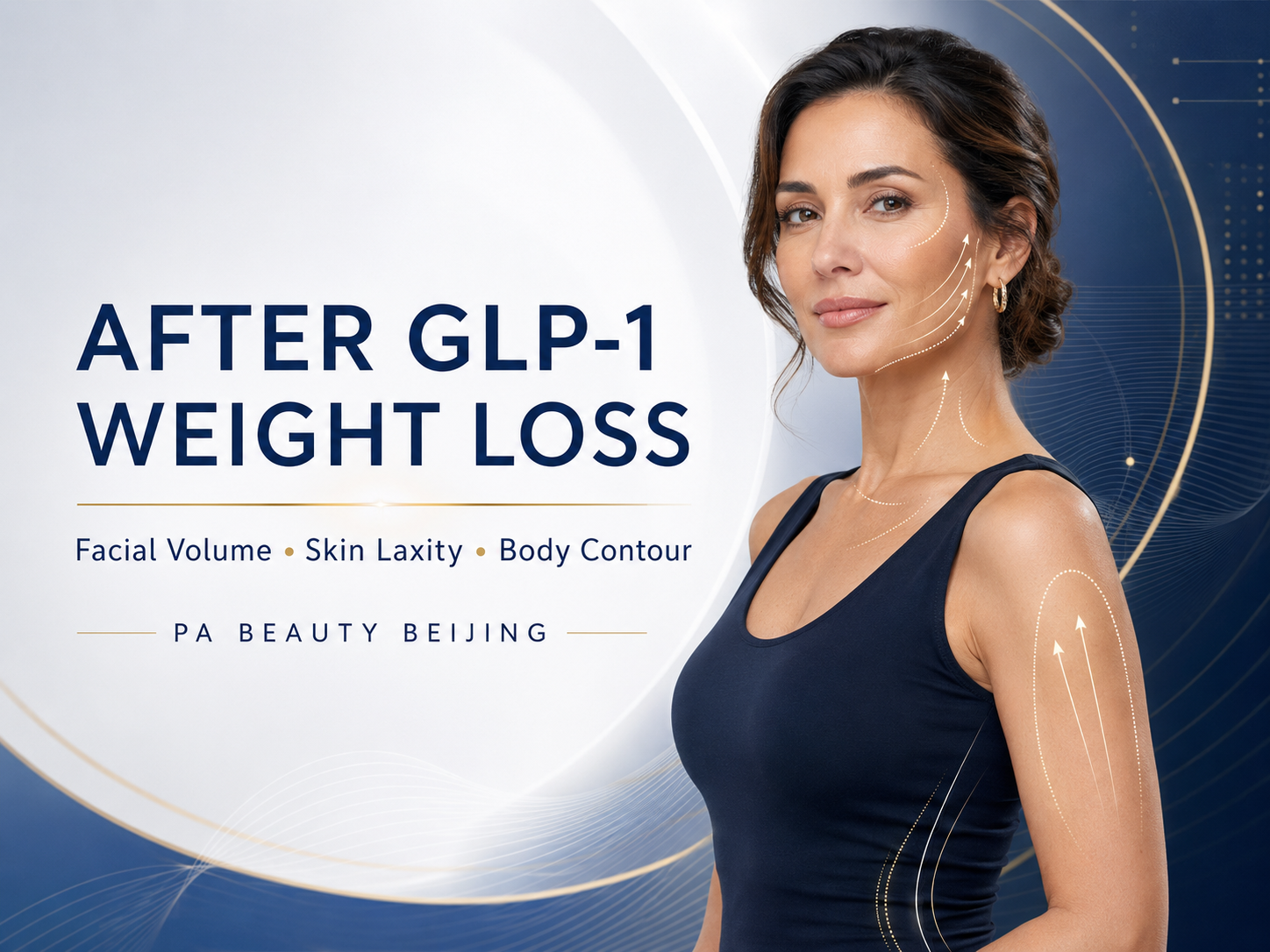
GLP-1 and dual GIP/GLP-1 medications have changed modern weight management.
Medicines such as semaglutide and tirzepatide may help suitable patients achieve substantial weight loss by reducing appetite, improving satiety and supporting better metabolic control. For many people, this can bring meaningful health benefits and a renewed sense of confidence.
However, as the body becomes smaller, some patients notice unexpected aesthetic changes:
Hollow or flatter cheeks
More visible under-eye shadows
Deeper facial folds
A softer jawline
Loose skin around the face, neck, arms or abdomen
Reduced muscle definition
Changes in breast or buttock volume
Cellulite that appears more noticeable
A body shape that does not yet feel balanced
These changes are often described on social media as “Ozempic face,” “Mounjaro face” or “GLP-1 body.”
But these labels can be misleading. GLP-1 medications do not simply “damage” the face or skin. In most cases, the visible changes are related to the amount and speed of weight loss, reduced fat volume, the skin’s ability to contract and changes in lean body mass.
The right solution depends on whether the main problem is volume loss, skin laxity, reduced muscle support, dehydration or residual localized fat. These are not the same problem and should not receive the same treatment.
What Is “Ozempic Face”?
“Ozempic face” is an informal term used to describe facial changes that may become visible after significant weight loss while taking a GLP-1 medication.
Common features include:
Flattening of the cheeks
Hollowing around the temples
More visible tear troughs
Deeper nasolabial folds
Lines around the mouth
Reduced jawline definition
Loose skin beneath the chin
A thinner, more tired-looking face
Greater visibility of existing wrinkles
The term is not a formal medical diagnosis. Similar changes can occur after weight loss achieved through diet, bariatric surgery, illness or other methods.
A recent anatomical review found that facial changes associated with medically assisted weight loss may involve several structural layers, including superficial fat loss, reduced deep support and increased skin laxity. The midface appears particularly susceptible to visible deflation. Review of GLP-1-related facial changes
The medication itself is therefore only one part of the story. The more important factor is often what happens when facial tissues lose volume faster than the overlying skin can adapt.
Why Does the Face Change After Weight Loss?
The face contains multiple superficial and deep fat compartments. These provide softness, contour and support for the skin.
When facial fat decreases, the skin has less underlying volume to cover. This can make existing folds and shadows more noticeable.
Loss of superficial facial fat
Superficial fat contributes to the smooth transitions between the cheeks, mouth, jawline and surrounding facial areas.
When it decreases, you may notice:
Flatter cheeks
More visible facial grooves
A less smooth jawline
Increased shadowing
More apparent skin looseness
Reduced deep structural support
Deeper fat compartments support facial shape and projection. When this support changes, the midface may appear less lifted, allowing folds around the nose and mouth to become more noticeable.
Skin that cannot fully contract
Skin can adapt to gradual changes in body size, but its ability to contract is influenced by:
Age
Genetics
Amount of weight lost
Speed of weight loss
Duration of previous overweight or obesity
Sun exposure
Smoking
Hormonal changes
Previous weight fluctuations
Baseline collagen and elastin quality
Younger skin with good elasticity may adapt more easily. Mature, sun-damaged or previously stretched skin may remain looser after the underlying volume decreases.
Natural aging becomes more visible
Facial fat, collagen and bone support naturally change with age. Weight loss may uncover changes that were already developing but were previously less visible because of greater facial fullness.
This is why two people who lose the same amount of weight may look very different afterward.
Is It the Medication or the Weight Loss?
Current evidence does not establish “GLP-1 face” as a unique toxic effect in which the medication directly destroys facial tissue.
The more reasonable explanation is a combination of:
Significant total weight loss
Loss of facial fat
Rapid change in tissue volume
Reduced skin elasticity
Age-related structural changes
Possible nutritional deficiencies
Some loss of lean tissue
Someone losing the same amount of weight through another method could experience similar facial deflation and skin laxity.
This distinction matters. Fear of facial aging should not automatically prevent an appropriate patient from receiving medically beneficial weight-loss treatment. Aesthetic concerns can be assessed separately and managed according to their actual cause.
Does Faster Weight Loss Cause More Loose Skin?
Rapid weight loss may make facial and body changes appear more sudden. The skin has less time to adapt as the volume beneath it decreases.
However, speed is not the only factor. Loose skin can still occur after gradual weight loss, especially when:
The total weight loss is large
The person has been overweight for many years
Skin elasticity is already reduced
There have been repeated cycles of weight loss and regain
The abdomen, breasts or upper arms were significantly stretched
The person is older
There is extensive sun damage or a history of smoking
Patients should not change their medication dose or intentionally slow treatment without speaking to the prescribing clinician. The safest rate of weight loss depends on the person’s health, medication tolerance and medical plan—not only appearance.
What Happens to Skin Quality?
Facial volume loss and skin quality are related but different concerns.
After weight loss, the skin may appear:
Drier
Thinner
Less luminous
Less firm
More crepey
More lined
Less resilient
Some people also eat much less after starting a GLP-1 medication. If appetite suppression leads to inadequate protein, essential fats, vitamins or minerals, the skin and hair may be affected.
Other possible contributors include:
Dehydration
Reduced dietary variety
Low protein intake
Menopause or perimenopause
Stress
Poor sleep
Increased sun exposure
Overuse of irritating skincare
Loss of the softening effect previously provided by facial fat
A moisturizer or skin booster may improve hydration and surface texture, but it cannot restore a large amount of lost facial volume.
What Happens to Body Contour?
Weight reduction can improve waist circumference and reduce both visceral and subcutaneous fat. But body contour does not always change in a perfectly even or predictable way.
Patients may notice:
A smaller waist but loose abdominal skin
Reduced arm volume with “bat-wing” laxity
Less breast fullness
Flatter buttocks
Looser inner thighs
Residual fat in genetically resistant areas
More apparent cellulite
Reduced muscle definition
Changes in posture or body proportions
The body may also continue to change after the scale stabilizes. It can therefore be useful to wait before deciding whether a perceived contour problem is temporary, still evolving or likely to require treatment.
Does GLP-1 Weight Loss Cause Muscle Loss?
Weight loss generally includes some reduction in lean mass as well as fat mass.
However, the claim that GLP-1 medications cause most of the weight to come from muscle is not supported by the overall evidence. Recent meta-analyses indicate that fat loss usually exceeds lean-mass loss, meaning relative body composition may improve even though absolute lean mass decreases. 2026 systematic review and meta-analysis
Nevertheless, preserving muscle remains important for:
Strength
Mobility
Metabolic health
Bone support
Posture
Glucose control
Long-term weight maintenance
Body shape and firmness
Muscle loss may be more concerning in older adults, people who already have low muscle mass, those eating too little protein or anyone losing weight without resistance exercise.
Lean mass should not be judged by appearance alone. Body-composition measurements, strength, diet and medical history all provide useful information.
How Can You Support Muscle During GLP-1 Treatment?
A personalized medical and nutritional plan is best, but general priorities often include:
Adequate protein
When appetite is low, each meal needs to contribute meaningful nutrition. Protein requirements vary according to body size, health, kidney function, activity and age.
People with kidney disease or other medical conditions should not begin a high-protein diet without professional advice.
Resistance training
Strength training provides a signal for the body to retain and develop muscle. Appropriate exercises may include:
Weight training
Resistance bands
Body-weight exercises
Pilates with progressive resistance
Supervised functional training
Cardiovascular exercise remains beneficial, but it does not fully replace resistance training for preserving muscle.
Avoiding extreme calorie restriction
The medication may suppress appetite so effectively that some patients unintentionally eat far too little. Persistent inability to eat, vomiting, weakness or rapid unplanned weight loss should be discussed with the prescribing clinician.
Reviewing deficiencies
Hair shedding, fatigue, weakness or poor recovery may warrant assessment of dietary intake and relevant laboratory markers rather than simply purchasing a beauty supplement.
Can You Prevent “Ozempic Face”?
It may not be possible to completely prevent facial volume loss during substantial weight reduction. Facial fat distribution is strongly influenced by genetics, age and baseline anatomy.
However, the following may support a healthier transition:
Use GLP-1 medication under medical supervision
Avoid changing the dose solely to accelerate cosmetic weight loss
Maintain adequate protein and overall nutrition
Include regular resistance exercise
Stay appropriately hydrated
Protect the skin from ultraviolet exposure
Avoid smoking
Use a consistent, non-irritating skincare routine
Reassess the face and body during weight loss
Allow time for stabilization before extensive correction
No cream, supplement, facial or injectable treatment can guarantee prevention of post-weight-loss facial change.
Should You Wait Until Your Weight Is Stable?
For major structural correction, a relatively stable weight often makes planning more predictable.
If substantial additional weight loss is expected, facial and body proportions may continue to change. Correcting every change immediately can lead to repeated procedures or excessive treatment.
That does not mean all aesthetic care must wait. During the weight-loss period, treatment can focus conservatively on:
Hydration
Barrier support
Sun protection
Skin quality
Gradual collagen-support strategies
Monitoring changes
Maintaining rather than overcorrecting facial balance
Once weight is approaching a stable range, it becomes easier to determine which concerns remain.
First Identify the Actual Problem
Before choosing a treatment, ask which of the following is most important.
| Main concern | What it may look like | What it usually requires |
|---|---|---|
| Facial volume loss | Hollow cheeks, temples or under-eyes | Structural assessment; selected filler, biostimulator or fat transfer may be considered |
| Skin laxity | Loose jawline, neck or crepey skin | Collagen-support or tightening treatment; advanced laxity may require surgery |
| Dehydration | Fine surface lines, dullness, tightness | Skincare, hydration and selected skin-quality treatments |
| Reduced muscle support | Flatter buttocks, poor definition, weakness | Protein, resistance training and medical or nutritional assessment |
| Residual localized fat | Persistent pockets despite overall weight loss | Contour assessment after weight stabilization |
| Excess skin | Hanging or folded skin on the abdomen, arms or thighs | Non-surgical treatments have limits; surgical consultation may be appropriate |
| Cellulite | Dimpling that appears more noticeable | Individualized body-contour assessment; results vary |
Several problems may coexist, but they should not be treated as if they were interchangeable.
What Can Skincare Realistically Do?
A well-designed skincare routine can improve:
Hydration
Surface smoothness
Skin-barrier function
Dullness
Some fine lines
The appearance of photoaging
Useful ingredients may include:
Sunscreen
Retinoids when appropriate
Vitamin C
Peptides
Ceramides
Hyaluronic acid
Glycerin
Niacinamide
Antioxidants
Skincare cannot meaningfully replace lost facial fat or remove substantial excess skin. A product promoted specifically for “Ozempic face” is not automatically more effective than a well-formulated conventional anti-aging product.
Can Collagen Treatments Tighten Loose Skin?
Treatments designed to support collagen remodeling may improve skin quality and produce a degree of gradual firming in suitable candidates.
Potential options vary by clinic and may include:
Radiofrequency-based treatments
Ultrasound-based treatments
Microneedling or RF microneedling
Laser treatment
Injectable collagen biostimulators
Other professionally delivered collagen-support treatments
Results depend on the device, treatment depth, baseline laxity, treatment area and individual response.
Non-surgical tightening is generally more appropriate for mild to moderate laxity. The American Academy of Dermatology notes that these procedures tend to produce gradual and usually modest tightening; people with substantial sagging may obtain limited benefit from non-surgical treatment. American Academy of Dermatology guidance
Can PDRN, Exosomes or Mesotherapy Restore Facial Volume?
These treatments should mainly be understood as skin-quality treatments, not replacements for missing structural volume.
Depending on the formulation and individual suitability, mesotherapy may help with:
Hydration
Fine surface lines
Texture
Dullness
Overall skin appearance
PDRN, exosome or hyaluronic-acid mesotherapy may make dehydrated skin appear smoother and fresher. It cannot reliably rebuild a significantly deflated cheek or lift advanced loose skin.
Marketing phrases such as “facial fat regeneration” or “complete Ozempic-face reversal” should be approached cautiously.
When Might Dermal Filler Be Considered?
Dermal filler may help selected patients with true structural volume loss in areas such as the:
Midface
Cheeks
Temples
Chin
Jawline
Perioral region
However, post-weight-loss treatment requires restraint.
If loose skin is mistakenly treated only by adding volume, the face can become heavy, overfilled or poorly balanced. Filling every visible line is rarely the best approach.
A careful assessment should consider:
Where volume was lost
Whether the skin can be supported without heaviness
Facial proportions
Remaining weight-loss plans
Previous filler
Product choice
Vascular anatomy
Whether a lifting or surgical approach would be more appropriate
The temples and under-eye region require particular expertise because they contain important blood vessels and other anatomical structures.
What About Botulinum Toxin?
Botulinum toxin treats muscle activity rather than lost fat or loose skin.
It may help with concerns such as:
Dynamic forehead lines
Frown lines
Crow’s feet
Selected lower-face muscle patterns
It does not restore cheek volume or directly tighten excess skin.
In a face that has become very thin, reducing certain facial muscles too aggressively may make the face appear narrower or less supported. Treatment should therefore be planned according to current anatomy rather than repeating a previous standard dose automatically.
Can V-Plus Face Lifting Help?
A non-invasive face-lifting treatment may temporarily improve:
Puffiness
Facial definition
The appearance of mild laxity
Overall facial freshness
It may be useful for clients who want a gentle, low-downtime approach.
However, it should not be presented as a replacement for lost facial volume, a surgical facelift or treatment for advanced laxity. The expected result should match the degree of the problem.
Can Body-Contouring Treatments Remove Loose Skin?
This depends on what is creating the unwanted contour.
A body area may contain a combination of:
Residual fat
Loose skin
Weak underlying muscle
Fluid retention
Cellulite
Fibrous tissue
Changes following large weight loss
A treatment intended to improve circulation, tissue comfort or the appearance of cellulite cannot remove a large fold of excess skin.
Likewise, further fat reduction may make laxity more obvious if the actual problem is already too little underlying volume.
For substantial hanging skin after major weight loss, body-contouring surgery may be the only treatment capable of physically removing the excess tissue.
Where Does Kingbody Fit Into Post-Weight-Loss Care?
At PA BEAUTY, Kingbody may be considered for selected clients seeking non-surgical support for:
The appearance of cellulite
Tissue firmness
Local body-contour refinement
Body-care maintenance after weight loss
Selected post-procedure recovery programs when medically appropriate
Kingbody is not a substitute for:
Resistance exercise
Adequate protein
Medical weight management
Treatment of true muscle loss
Surgical removal of excess skin
Management of an undiagnosed medical condition
A body assessment is needed before deciding whether the main concern is cellulite, laxity, fluid retention, residual fat or excess skin.
When Is Surgery More Realistic?
A surgical consultation may be appropriate when a person has:
Substantial hanging abdominal skin
Severe upper-arm or thigh laxity
Major breast deflation
Persistent skin folds causing irritation
Advanced facial or neck laxity
Realistic expectations but inadequate response to non-surgical care
Possible surgical procedures include:
Facelift or neck lift
Abdominoplasty
Arm lift
Thigh lift
Breast lift
Lower-body lift
Surgery has greater risks, expense and recovery requirements, but it can remove excess tissue in a way that skincare and non-surgical devices cannot.
A More Balanced Treatment Strategy
Post-GLP-1 aesthetic care should not automatically mean “filler everywhere.”
A sensible sequence may look like this:
1. Protect health and muscle
Continue medical follow-up, prioritize nutrition and include resistance training.
2. Approach a sustainable weight
Avoid planning extensive correction while facial and body proportions are still changing rapidly.
3. Reassess after stabilization
Allow time to see how much the skin naturally contracts and which concerns remain.
4. Separate volume from skin quality
Decide whether the face needs structural support, collagen remodeling, hydration or a combination.
5. Start conservatively
Treat the highest-priority concern without trying to reproduce the person’s previous weight or facial fullness exactly.
6. Review the result before adding more
Post-weight-loss faces can be easily overtreated. Gradual correction is usually more controllable than attempting a dramatic transformation in one session.
When Should You Speak to Your Prescribing Clinician?
Contact your medical provider if you experience:
Persistent vomiting or inability to eat
Severe or ongoing abdominal pain
Marked weakness
Dizziness or fainting
Signs of dehydration
Very rapid unintended weight loss
Significant hair shedding
Loss of strength or mobility
Symptoms of nutritional deficiency
Difficulty maintaining a healthy weight
Concern about your medication dose
Do not stop, increase or reduce a prescribed GLP-1 medication based only on beauty concerns without medical advice.
GLP-1 Weight Management and Post-Weight-Loss Care at PA BEAUTY Beijing
At PA BEAUTY, we assess post-weight-loss concerns according to the underlying problem rather than applying the same treatment to every client.
An assessment may consider:
Current and target weight
Rate and duration of weight loss
GLP-1 medication and dose
Facial-fat distribution
Skin elasticity
Dehydration and skin-barrier condition
Muscle activity
Remaining localized fat
Cellulite
Previous filler or aesthetic treatments
Nutrition and exercise habits
Upcoming travel or events
Acceptable downtime
Depending on individual suitability, options may include:
GLP-1 weight-management consultation
Type III Collagen Rejuvenation
Exosome + PDRN + Hyaluronic Acid
Hyaluronic-acid skin-quality treatments
V-Plus Face Lifting
Personalized filler assessment
Kingbody body-contour and cellulite care
Deep Hydrating and barrier-support treatments
Not every client needs treatment. In some cases, improving nutrition, building muscle and allowing the weight to stabilize are more appropriate first steps.
Book an English-Language Consultation in Beijing
When contacting us, it is helpful to provide:
Your age
Current and starting weight
Approximate amount of weight lost
How quickly the weight was lost
Medication name and current dose
Whether your weight is still changing
Your main facial or body concern
Previous filler or body-contouring history
Clear photographs in natural light
Any relevant medical conditions
Contact PA BEAUTY
📍 Shine Hills, Shunyi, Beijing
Near ISB, Dulwich College Beijing and Keystone Academy
Approximately 30 minutes from Beijing Capital International Airport
📱 WeChat: parishy2012
📞 WhatsApp: +86 138 1124 8726
🌐 Website: www.beijingpabeauty.com


 WhatsApp
 Email
Email
 +86 13811248726