

Why PLLA Is the Future of Natural Facial Rejuvenation: The Truth Behind Its Rapid Rise in Popularity
The Challenge Many Patients Face with Traditional Aesthetic Treatments
One of the most common concerns among aesthetic patients today is not simply wrinkles or volume loss — it is skin that looks tired, loose, or artificially overfilled despite treatment. Many individuals who have tried traditional hyaluronic acid (HA) fillers report that while volume may initially improve, the skin itself often remains lax, textured, or unnatural in appearance over time.
HA fillers work by attracting and retaining water within the tissue. While this can temporarily restore fullness, it does not address the underlying decline in collagen and elastin that naturally occurs with aging. In some cases, excessive water absorption can lead to a swollen or “puffy” look, particularly in delicate facial areas — a result many patients wish to avoid.
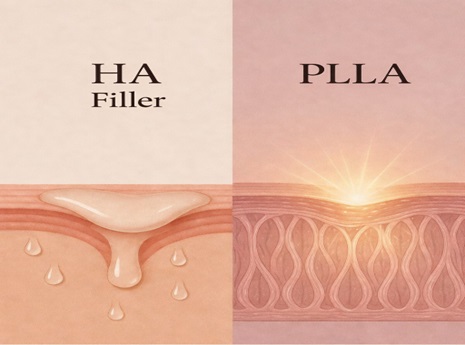
Why Collagen Loss — Not Just Volume Loss — Is the Real Issue
As we age, the skin gradually loses its structural proteins, especially collagen and elastin, within the reticular dermis. This decline weakens the skin’s internal framework, leading to sagging, hollowing, and loss of firmness. Simply adding volume without restoring this structure often fails to deliver lasting or natural results.
This is where Poly-L-Lactic Acid (PLLA) stands apart.
Rather than acting as a traditional filler, PLLA works by stimulating the body’s own collagen regeneration, encouraging gradual strengthening of the dermal matrix. Over time, this process restores support from within — improving not just how the skin looks, but how it behaves.
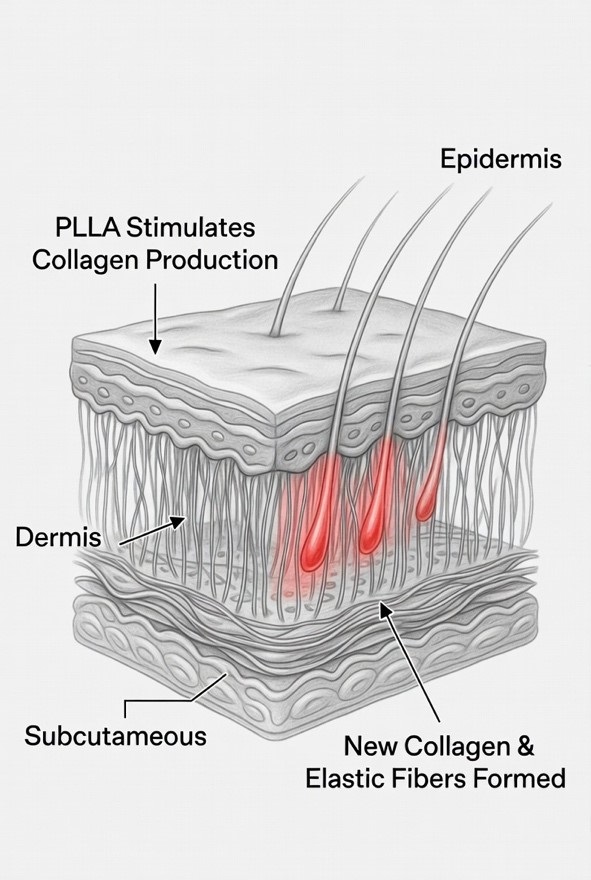
Why PLLA Excels Where HA Fillers May Fall Short
While HA fillers remain useful for certain indications, they have limitations when treating skin laxity and global aging. HA’s tendency to absorb water can sometimes over-enhance treated areas, creating disproportionate fullness that does not move or age naturally.
PLLA avoids this issue by allowing the skin to rebuild itself. As collagen fibers increase and elastin support improves, the skin becomes naturally firm and plumped, without the risk of excessive volume or distortion. This makes PLLA particularly effective for treating:
Sunken or hollow areas
Mild to moderate skin laxity
Textural irregularities
Overall loss of facial structure
Strengthening the Skin from Within
Clinical observations show that PLLA contributes to:
Increased collagen density
Improved elastic fiber structure
Reduction in elastin breakdown within the reticular dermis
Together, these effects help restore the skin’s resilience, firmness, and youthful contour — outcomes that topical treatments and traditional fillers cannot fully achieve on their own.
PLLA Remains the Future of Aesthetic Medicine
As aesthetic medicine continues to evolve, the focus is shifting away from instant fixes and toward long-term skin health and regeneration. Patients increasingly value treatments that enhance their natural features while maintaining authenticity.
PLLA aligns perfectly with this shift. By addressing collagen loss at its source, it offers durable, natural-looking rejuvenation that continues to improve over time. Its ability to reduce sagging, refine texture, and restore volume without overfilling positions PLLA as a cornerstone treatment for the future of non-surgical aesthetics.
PLLA is not about changing how you look — it’s about supporting your skin’s ability to look like its healthiest self.
At PA Beauty, we believe in thoughtful, personalized treatments. A consultation allows us to determine whether PLLA is the right choice to support your skin’s natural renewal.
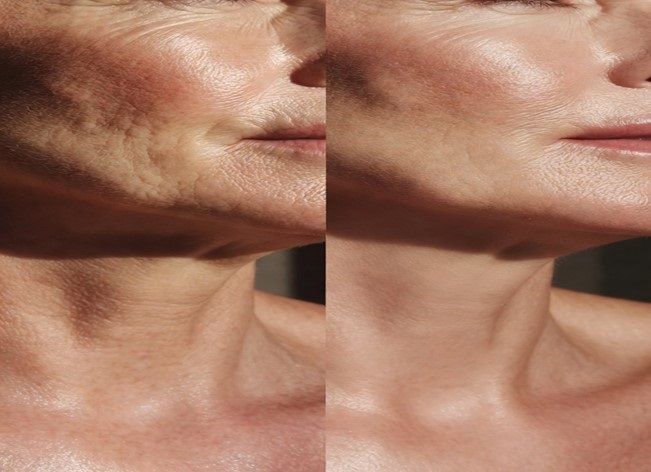
Ready to glow and enhance?
📅 Book Your Private Consultation Today
Available in English & Chinese | Strictly Confidential
👉 WeChat: 64482369 (Fastest Way)
📞 +86 138 1124 8726
✉️ beijingpaskincareexpert@gmail.com
PA BEAUTY – Natural Aesthetics for Beijing’s Global Elites
📍 Located in Shine Hills (Xiangyun Xiaozhen), Shunyi – The Heart of Beijing's International Community. (Just minutes from ISB, Dulwich, Keystone, and the villa districts. Only 30 minutes drive from Beijing Capital Airport (PEK) — perfect for layovers, short trips, or busy travelers.)
Book a free consultation today — your upgraded version awaits! ✨
// Popular Feeds
-

-

Medical Aesthetics in the West vs. East
Jul 11,2026 -

Exosome Mesotherapy
Jul 11,2026 -

-

-

 WhatsApp
 Email
Email
 +86 13811248726