

Mini Facelift or Full Facelift? How to Tell Which One Your Face Actually Needs
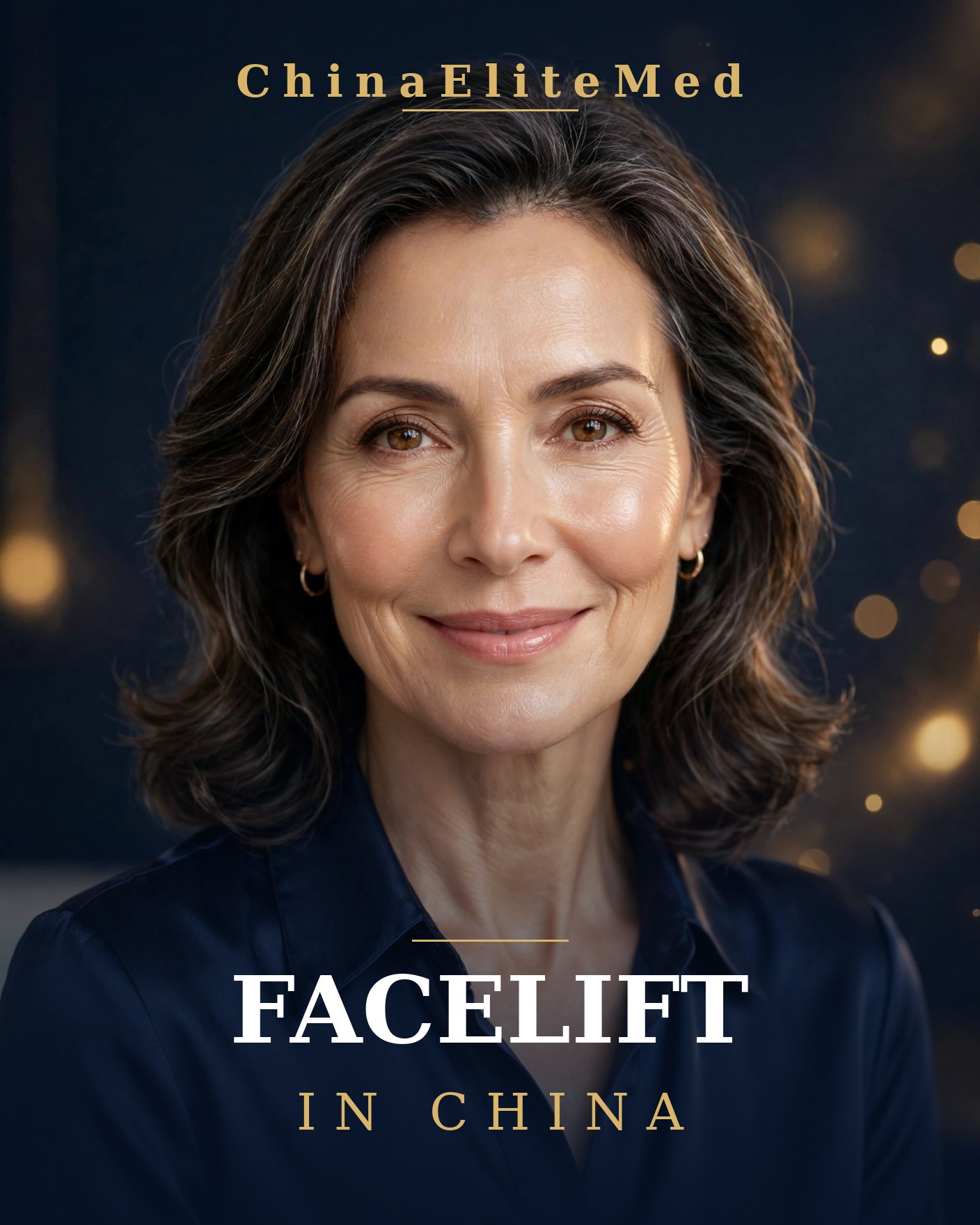
Mini Facelift or Full Facelift? How to Tell Which One Your Face Actually Needs
There comes a point when no cream, no serum and no facial can fix what you see in the mirror — not because the products are bad, but because the problem is no longer in the skin. The jawline softens into jowls, the cheeks slide downward, the folds around the mouth deepen. That is tissue descent, and it happens underneath the skin. Once it reaches a certain point, the honest question is not which cream to buy next. It is whether you need a lift — and if so, which one.
This article explains the difference between a mini facelift and a full facelift, what each costs in Beijing, what recovery really looks like, and — just as importantly — when a facelift is the wrong answer and a non-surgical treatment is the better one. PA BEAUTY does not perform surgery in-house. What we do is the step most people skip: a free professional skin analysis that tells you which problem you actually have, and then, if surgery is the right answer, an English-language consultation with a licensed surgeon at a partner hospital — with a written, itemised quotation before you commit to anything.
What a Facelift Actually Lifts
A facelift — clinically, a rhytidectomy — repositions and tightens the deeper supporting tissues of the face and neck and removes redundant skin, so the jawline, cheeks and neck look firmer and less descended. It is the most substantial facial rejuvenation operation available, and the one where the choice of surgeon matters most.
The key layer is the SMAS (superficial musculoaponeurotic system), a fibrous muscular sheet beneath the skin that supports the cheeks and jawline. With age it loosens and descends, cheek fat pads shift downward, the jawline loses definition, and folds deepen around the mouth. Skin alone, pulled tight, cannot correct that — and a skin-only pull is what produces the stretched, "operated" look everyone fears. Modern facelift surgery works primarily on this deeper layer, repositioning and securing it, then re-drapes the skin over the new foundation without tension. How deeply and how extensively the surgeon works on that layer is the main difference between the named techniques.
Mini Facelift vs Full Facelift
| Mini-incision facelift (小拉皮) | Full facelift (大拉皮) | |
|---|---|---|
| Area | Lower face to mid-lower face | Full face |
| Anaesthesia | Local anaesthesia | General anaesthesia |
| Operating time | About 1.5 hours | About 3 hours |
| Back to normal work | 3 days | About 5 days of rest |
| Stitches removed | 1 week | Day 10 |
| Incision marks settle | About 3 months | About 3 months |
| Suits | Moderate laxity and loose skin | Severe laxity |
| How long it lasts | 5–8 years | 10+ years |
| Confirmed price | ¥19,800–26,800 | ¥53,800 |
A mini-incision (short-scar) facelift uses shorter incisions, usually around the ears only, with more limited undermining. It suits earlier, mainly lower-face and jawline laxity. It is a smaller operation with a shorter recovery — and it cannot achieve what a full facelift achieves. A patient who needs a full lift will not get a satisfactory result from a mini procedure, however appealing the shorter scar sounds. The surgeon confirms which applies after examining your face; degree of laxity is the main guide.
Other named techniques — mid-facelift (cheeks only), lower facelift (jawline and upper neck), deep-plane facelift (releasing and repositioning the deeper tissues as a single unit) — are quoted individually in the written quotation. A deep-plane lift is technically demanding and offered by surgeons with specific training and volume in the technique; it is not automatically superior for every patient, and the surgeon's experience with a given technique matters more than the name of the technique.
Where there is excess facial fat, facial liposuction can be combined with the lift at ¥5,800 per area, charged separately. A facelift is also frequently combined with a neck lift, eyelid surgery, a brow lift, or fat grafting to restore volume that lifting alone cannot replace. Each addition changes the operating time, the recovery and the quotation, and is agreed at consultation rather than assumed.
What a Facelift Cannot Do — and What Can
This is the part that saves people from an expensive mistake. A facelift lifts and tightens. It does not change skin texture, remove fine wrinkles on its own, correct sun damage or pigmentation, or replace lost facial volume. If your main concern is skin quality, fine lines or volume loss alone, a facelift is the wrong tool — fillers, resurfacing or fat grafting may be the honest answer, alone or combined.
That is exactly why we start with a free skin analysis instead of a sales pitch. At PA BEAUTY, a VISIA skin analysis shows what is actually going on under the surface — laxity versus dehydration, pigmentation, pore and collagen condition — and we build a plan from the results. For many clients, the right answer is not surgery at all. It is the service ladder we use every day:
Free professional skin analysis → deep cleansing → hydration → collagen rejuvenation / mesotherapy — with PDRN mesotherapy from ¥1,980 for skin that needs repair and renewal from within, and our signature glass skin treatment for a visible lift in glow and firmness without a scalpel.
Non-surgical treatments cannot reposition descended deeper tissue or remove redundant skin. But if your problem is skin quality rather than descent, they are the better answer — less risk, no general anaesthesia, no weeks of recovery. An honest assessment tells you which problem you have before you spend anything. If the assessment says the laxity is beyond what non-surgical care can correct, we will tell you that too — and arrange the surgical consultation.
Recovery: What It Really Looks Like
Recovery from a facelift is measured in weeks and months, not days. Individual healing varies considerably, and the operating surgeon's instructions take precedence over any general timeline. The figures below are the partner hospital's confirmed recovery wording.
First days: swelling and bruising, tightness across the face and neck, dressings or a head wrap in place; discomfort is usually managed with prescribed pain relief. Rest, head elevated, help with daily tasks — a companion is genuinely useful in this phase.
First 1–2 weeks: bruising and swelling at their most visible, then gradually settling; stitches are removed on the surgeon's schedule (1 week for a mini lift, day 10 for a full lift). No social plans that require looking presentable.
Weeks 2–4: most patients look presentable to others, with residual swelling and some numbness or tightness remaining; light desk work is often realistic depending on healing.
Weeks 4–6: swelling continues to settle, sensation gradually returns, scars begin to mature. Exercise is reintroduced on the surgeon's schedule, stage by stage.
Months 2–6: the result refines as deep swelling resolves and tissues soften; scars fade from red and raised toward pale and flat. Sun protection for healing scars matters.
Months 6–12 and beyond: the result stabilises; scars continue to mature, though they do not disappear. Ageing continues from the new baseline — the lift resets laxity, it does not stop time.
Flying home is not a matter of counting days from surgery. You fly only after the operating team has reviewed early healing at the in-person follow-ups and cleared travel, and your stay in China must be long enough for those reviews to happen.
How to Choose a Surgeon and Hospital
For a facelift, surgeon and facility selection is the most consequential decision in the entire trip — more consequential than the price, the hotel or the flight.
A licensed plastic surgeon with deep facelift experience. Confirm registration and training, and ask how many facelifts the surgeon performs each year, and of which type. Ask to see before-and-after photographs of faces comparable to your own — similar age, similar degree of laxity, similar skin quality — from several angles, including the scars around the ears.
An accredited hospital with real emergency capacity. General anaesthesia and facial surgery require a real hospital: anaesthetic monitoring, emergency protocols, inpatient or observation nursing. The operation should not take place in a non-clinical beauty setting.
A written operative plan and itemised quotation. The type of lift, the incisions, the anaesthesia, the expected stay, follow-up schedule and revision policy — together with the price, its inclusions and exclusions — should all be documented before surgery. The figures in this article (mini ¥19,800–26,800, full ¥53,800) are the partner hospital's confirmed prices; the full inclusions and exclusions list is still to be confirmed, and your own quotation will itemise them in writing. Never pay a deposit on the basis of a headline figure alone.
An honest conversation about risks. Every facelift carries risks, including bleeding and haematoma, infection, injury to the facial nerve (usually temporary, rarely lasting), unfavourable scarring, asymmetry, skin loss in rare cases, and anaesthetic risks. A surgeon who minimises these risks is telling you what you want to hear. The surgeon who explains them, and how they are managed, is the one to trust.
Communication in a language you fully understand. Informed consent through guesswork is not informed consent. Every consultation we arrange is conducted in English, with consent documents explained in English before signing.
A headline figure dramatically below the level at which accredited facial surgery is normally offered usually means something has been removed — surgeon qualification, facility accreditation, anaesthetic cover or aftercare — and the face is not an area to test that theory on. For context, the same operation commonly costs substantially more in the United States, the United Kingdom or Australia. That difference reflects a different cost structure for accredited care, not a different standard of facility or surgeon qualification.
How It Works Through PA BEAUTY
PA BEAUTY is a beauty clinic in Beijing, not a hospital — we do not perform surgery. Here is how a facelift enquiry works with us:
Free skin analysis at our clinic. Book a free VISIA professional skin analysis. We assess laxity, skin quality and volume, and tell you honestly whether your concern is a surgical problem, a skin-care problem, or a combination.
A tailored plan. If non-surgical care can solve it, we build your plan from our own treatments — deep cleansing, hydration, collagen rejuvenation and mesotherapy. If surgery is the right answer, we arrange an English-language consultation with a licensed surgeon at a partner hospital.
A written quotation before you decide. The surgeon examines you in person, agrees the operative plan, and gives you an itemised written quotation — price, inclusions, exclusions, recovery — before any booking. The surgery itself is always performed by the hospital's licensed surgeons, in the hospital's own accredited facilities.
Aftercare and follow-up. We stay your contact in English through recovery, and any concern is referred back to the operating surgeon.
Frequently Asked Questions
What is the difference between a mini facelift and a full facelift?A mini-incision facelift uses shorter incisions and a more limited correction, mainly of the lower face and jawline — ¥19,800–26,800, local anaesthesia, about 1.5 hours, back to normal work in 3 days, stitches removed at 1 week — and suits moderate laxity. A full facelift addresses the whole face more comprehensively — ¥53,800, general anaesthesia, about 3 hours, about 5 days of rest, stitches removed on day 10 — and suits severe laxity. The surgeon determines which applies after examination.
How long does a facelift last?A facelift resets laxity; it does not stop ageing. The partner hospital's confirmed figures are 5–8 years for a mini-incision facelift and 10+ years for a full facelift, varying with age at surgery, skin quality, sun exposure, weight stability and smoking. No honest surgeon promises a permanent result.
Will there be visible scars?Incisions are placed around the ears and into the hairline, where they are as concealed as possible. Incision marks generally settle to a natural appearance in about three months; scars continue to mature over 6–12 months but do not disappear.
Can non-surgical treatments achieve the same result?No. Fillers, threads and energy-based devices can improve volume, skin quality or mild laxity, but they cannot reposition descended deeper tissues or remove redundant skin. They are different tools for different problems — and the free skin analysis is how we find out which problem you actually have.
What does the price include?The confirmed prices are ¥19,800–26,800 for a mini-incision facelift and ¥53,800 for a full facelift; facial liposuction, where combined, is ¥5,800 per area and charged separately. The full inclusions and exclusions list is still to be confirmed. Any quotation should be confirmed in an itemised written quotation before it is relied on for payment.
Who performs the surgery?Licensed plastic surgeons at accredited partner hospitals in China. PA BEAUTY provides the skin analysis, the English-language consultation and coordination; we do not perform surgery ourselves.
What if I am not sure a facelift is right for me?Start with the assessment, not with a booking. Book a free skin analysis first — including telling you honestly if a smaller procedure, a non-surgical option, or no procedure is the better answer.
Book Your Free Skin Analysis
A facelift is a major decision, and the worst way to make it is to guess — about the procedure, the surgeon, the price or the recovery. The best way is a proper assessment, with the full picture in front of you before you decide anything.
Book a free VISIA professional skin analysis at PA BEAUTY — we will assess your skin, tell you honestly whether a facelift, a non-surgical treatment, or a combination is right for you, and arrange an English-language surgical consultation with a written quotation if surgery is the answer.
WhatsApp: +86 138 1124 8726
WeChat: 64482369
Email: beijingpaskincareexpert@gmail.com
Address: Room 608, 6F, Building 5, Xiangyun Town South, Shunyi, Beijing (DiDi: PA BEAUTY focus on problem skin — Xiangyun Town Store)
Hours: 10:00–20:00 daily, closed Tuesdays
Send us a message with a few photos and a short description of what concerns you, and we will take it from there — with no obligation.
// Popular Feeds
-

-

-

What Is PA BEAUTY Best Known For?
Mar 18,2026 -

Why Timing is Important with Laser Hair Removal
Jul 11,2026 -

-

Why Personalized Skincare Plans Matter
Jul 11,2026
 WhatsApp
 Email
 +86 13811248726